
Professor Richard Washington
Professor of Climate Science
Fellow and Tutor at Keble College, Oxford
Director of the Radcliffe Meteorological Station
Member of the Environment Research Doctoral Training Partnership
Professor of Climate Science
Fellow and Tutor at Keble College, Oxford
Director of the Radcliffe Meteorological Station
Member of the Environment Research Doctoral Training Partnership
Academic Profile
Richard Washington is Professor of Climate Science at the School of Geography and the Environment and Fellow of Keble College, Oxford. His specializes in African climate science and runs the African Climate research group.
He has degrees from the University of Natal and University of Oxford and has taught previously at the University of Natal, University of Stellenbosch and the University of Cape Town where he spent five years as a lecturer. His doctorate was on Africa-wide rainfall variability and change, which was undertaken jointly between the University of Oxford under Professor Alayne Street-Perrott and Professor Chris Folland's group at the Hadley Centre of the UK Meteorological Office. During this time he was a lecturer at Christ Church, Oxford. He took up a Departmental Lectureship at Oxford in 1995, a University Lectureship position and Fellowship at Keble College in 1999, a Readership in 2006 and was made Professor of Climate Science in 2010.
Richard's research is concerned with the African climate systems, including climate change, the mechanisms leading to floods and drought and the way these characteristics of climate are represented in climate models. He has also worked extensively on aerosols, particularly so on dust storms in the central Sahara and in southern Africa. He has run major observational campaigns involving both ground observations and instrumented aircraft in North and southern Africa. He is primarily funded by the Natural Environment Research Council (NERC).
Richard was Co-Chair World Climate Research Program African Climate Variability Panel (CLIVAR-VACS) 2006-2010 and served as a panel member of CLIVAR-VACS from 2003-2006. Richard leads the development of the CLIVAR Africa Climate Atlas. He has served as the World Climate Research Program representative to the International Council for Science southern Africa as well as membership of several external steering committees including AFRICANNESS (African Earth System Science) and the Stockholm Environment Institute-Oxford. He was one of 12 members of the NERC Climate Science Strategy Panel for the 2007-2012 NERC Science Strategy. He has taught on several World Climate Program "Climate Information and Prediction Services (CLIPS)" Workshops, including Nairobi, Niamey, Dar Es Salaam, Qatar and Tunis. He has served on the panel of judges for the Best Research Paper (SA Society for Atmospheric Scientists) from 2003-2009 and on the management board of several large climate programmes, including AMMAII, and the Climate Science Research Partnership between the Met Office and DFID. He has been an IPCC author in numerous assessment reports including Working Group 1 (Observations of climate change) and Working Group II (Africa).
Richard is an associate of Climate Change Risk Management and is Director of the Radcliffe Meteorology Station, the longest known continuous daily meteorological record with daily observations in Oxford since 1815.
Current Research
Richard has served as Principal Investigator of the £3.3m NERC Consortium Fennec - The Saharan Climate System, Principal Investigator of the £1.1m NERC research grant Dust Observations for Models, and the Co-Investigator of BoDEx (Bodele Dust Experiment). He is currently the Oxford Principal Investigator on the Future Climate for Africa UMFULA (Uncertainty Reduction in Models for Understanding Development Applications) and IMPALA (Improving Model Processes for African Climate) projects. FCFA is a c£20m programme. Richard is also a Co-Investigator of the CLARIFY (Clouds and Aerosol Radiative Impacts and Forcing Year 2016) project and the water security project 'Reach'.
There are two primary themes to this research, all of which has an African focus, namely African climate change and dust storms.
Dust Storms
Dust impacts the climate system through its interaction with radiation, clouds, weather systems and nutrient cycling. Quantifying these interactions is an ongoing concern of dust research generally. The main projects around which Richard's work has been based are BoDEx, Fennec, DO4Models and CLARIFY-2016. A key concern of Richard's research is diagnosing the controls on mineral aerosol (dust) emission and transport from the key global sources. A feature of these programmes is major field observational campaigns to remote areas where the dust sources are located. This work has included field experiments in the world's largest source of mineral aerosols, the Bodélé Depression Chad (BodEx field experiment) for which he was co-PI. (see article in Nature). He was one of the co-authors to be awarded the Environmental Research Letters Outstanding Article Award in 2007 for a paper on Bodélé dust and the Amazon basin. An important outcome of BoDEx included the identification of the Bodélé Low Level Jet, a strong wind which is crucial to the emission of dust from the basin (see Washington and Todd, 2005, Geophysical Research Letters and Washington et al 2006; Journal of Geophysical Research).
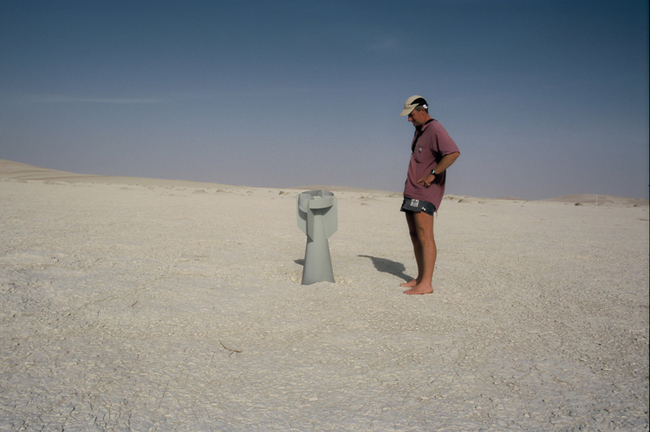
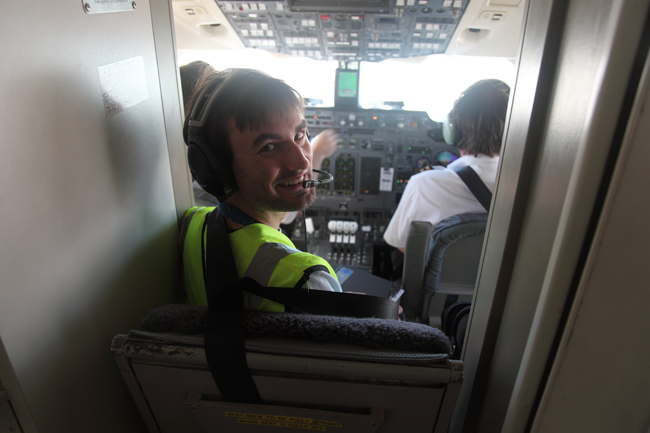
More recently the work on dust has been built around the Fennec and DO4Models programmes which Richard leads. Fennec is the first major programme to recover meteorological observations from the data void of the central Sahara. Over the years 2011 and 2012 Fennec led to the deployment of about 30 tons of ground-based instruments and equipment in the central Sahara, including a large collection of observations on the border of Mali and Algeria at Bordj Badi Mokhtar and at Zouerat in Mauritania. The project also involved >200 hours of flying, many at low level, over the central Sahara in the NERC/Met Office instrumented Bae-146 aircraft. Together the ground-based instruments and aircraft flights provided the first insights into the dynamics of dust, low level jets, cold-pool outflows from deep thunderstorms and the Saharan heat low. The weather and climate of the Sahara, in turn, forms a vital part of the West African Monsoon. The Fennec programme is summarised in this short film on youtube
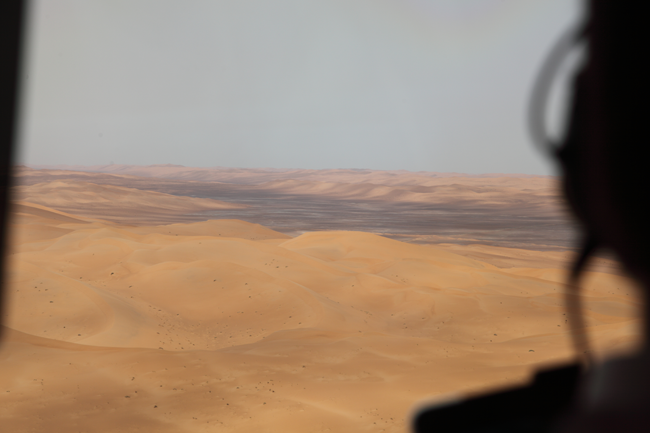
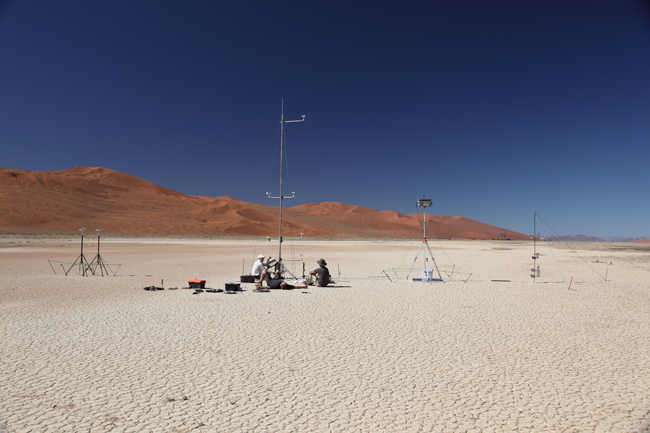
The DO4Models project which has been based on Sua Pan in Botswana, the dry river valleys and Etosha Pan in Namibia covering the period 2011-2015. The main aim of DO4Models was to gain observations of dust in the field in dust source areas with which to confront climate models which generally have poor specification of point source dust emission. The CLARIFY project will take the work in Namibia forward over the next few years.
African Climate Change
Through the recently funded projects IMPALA, UMFULA and Reach, Richard also has a research focus on African climate change, in particular evaluating how mechanisms of rainfall are represented in global and regional climate models and how these mechanisms work in the real world. This interest has extended to the preparation of climate variability and change assessments and future scenarios of African and tropical climate for a variety of government agencies and NGOs.
For further details on current research, see:
https://www.geog.ox.ac.uk/~rwashing/research/
http://africanclimateoxford.net
Research Funding
Current and Recent research funding includes:
- CLARIFY - Clouds and Aerosol Radiative Impacts and Forcing Year 2016 (NERC large-grant, Co-I)
- UMFULA - Uncertainty Reduction in Models for Understanding Development Applications (NERC, Oxford PI)
- IMPALA - Improving Model Processes for African Climate (NERC, Oxford PI)
- Reach - Improving Water Security for the poor (DFID, Oxford Co-).
- Fennec - The Saharan Climate System (NERC consortium grant, PI, 3.5m GBP total);
- DO4Models - Dust Observations for Models (NERC joint grant, PI, 1.1m GBP total);
- Tyndall Centre for Climate Change, PI Climate Outlooks;
- CCAFS - Analysis of Climate Models and climate trends in Africa, 2011-2012, PI, 100K;
- RGS Gilchrist Award, PI on Bodélé Dust Experiment;
- DFID African Climate Report; and
- DFID Climate Risk Kenya.
Research Team
- Sebastian Engelstaedter (Fennec)
- Dr Rachel James(IMPALA)
- Dr Ian Ashpole (IMPALA)
- Dr Neil Hart (UMFULA)
- Dr Ellen Dyer (DFID REACH)
- Amy Creese (DTP/NERC CASE/UMFULA)
- Callum Munday (DTP/NERC CASE/UMFULA)
- Josie Mahoney (DTP/NERC)
- Thomas Caton-Harrison (DTP/NERC)
- David Crowhurst (DTP/NERC)
- James King (DTP/NERC)
- Emma Howard (Sir John Monash Foundation Scholarship)
- Boipelo Tshwene-Mauchaza (Botswana Scholarship)
Teaching and Supervision
Richard received the University of Oxford teaching excellence award in 2010.
He is the external examiner for the Climate Change MSc at the University of East Anglia and the undergraduate physical geography course and UCD, Ireland.
Richard has chaired the Final Honour School Exam Board in Oxford over the period 2014-2016 inclusive.
Undergraduate Teaching
Richard teaches the 'Climatology' and 'Earth Observation and Application in Geography' courses for the Preliminary Examination.
He lectures on 'Observed Climate Change, Climate Models and Climate Change Detection, Attribution and Prediction' as part of the 'Earth Systems Dynamics' second year course. He convenes the Climate Change and Variability optional course which covers the General Circulation, Modes of Climate Variability, Seasonal Prediction, aerosols, African climate and Climate Models.
Postgraduate Teaching
Professor Washington teaches on two MSc programmes - MSc in Water Science, Policy and Management and MSc in Environmental Change and Management. He teaches the tropical climate system as part of the NERC Doctoral Training Programme in Oxford.
Current Graduate Research Students
| Kitty Attwood | African atmospheric processes and their scale interactions in observations and model simulations |
| Eoin Ware | Understanding the mechanisms of rainfall onset in Southern Africa |
Recent Graduate Research Students
| Charlie Knight | The Structure and Dynamics of the Congo Air Boundary |
| Thomas Caton Harrison | Variability of the dust-emitting low-level jet in the central and western Sahara through boreal summer |
| David Crowhurst | Dynamics Controlling the Seasonal Cycle of Congo Basin Evaporation |
| James A. King | Rainfall Dynamics and Change in East Africa: Tackling the 'Climate Paradox' |
| Boipelo Tshwene-Mauchaza | A re-design of Chobe National Park management system to optimise effectiveness under climate change: systems thinking approach |
| Josie Mahony | Links between East African Climate and wildlife |
| Amy Creese | Climate change in the Congo Basin: evaluating coupled models |
| Callum Munday | Representation of southern African climate in coupled models |
Selected Publications
For details of Professor Richard Washington's publications, please see his ORCID profile.