
Celebrating our graduates: dissertation and final year project awards

A huge congratulations to our recent graduates that have received internal departmental awards for their exceptional dissertations, end of year projects and field work. Below you can read about our prize winners' work, their findings and what inspired them to undertake these thought-provoking and often deeply personal projects.
Edward Holbrook
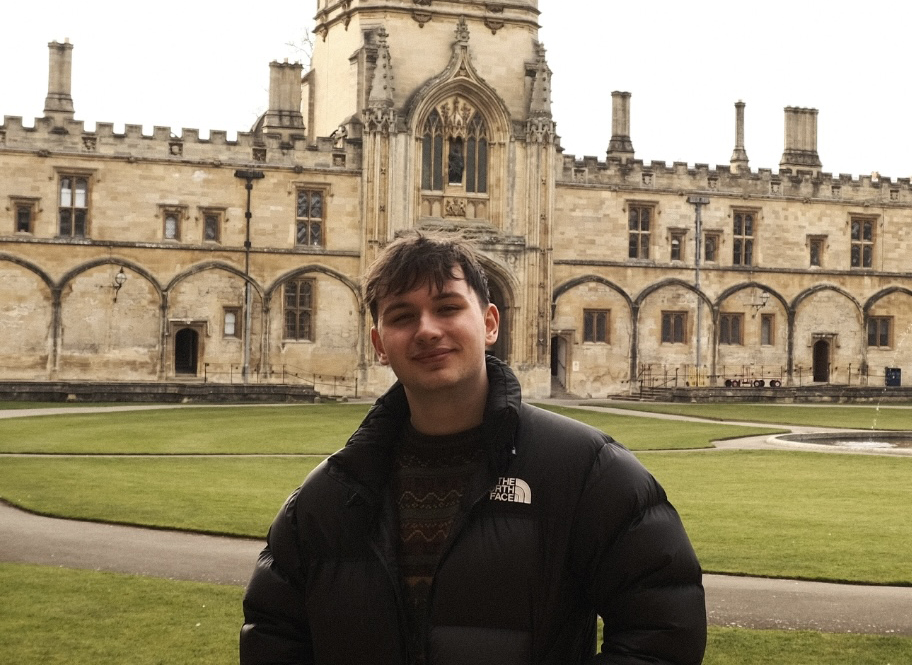
Linda McDowell Prize for Best Critical Human Geography dissertation
Edward’s dissertation is titled "Look... I know you don’t want to, but it’s got to be done": Examining practices of (quasi-) carceral (im)mobility within and beyond residential dementia care homes. The dissertation offers a critical interrogation of the everyday (im)mobilities experienced by individuals with dementia living in residential care settings. Ted’s dissertation has also been nominated for the RGS-IBG 'Health and Wellbeing’ research group undergraduate dissertation prize.
Based on a six-week period of observation and participation in a residential care home in Cheltenham, Gloucestershire over the summer of his second year, Ted’s dissertation brings together geographies of care, typically associated with compassion and support, and the carceral, associated with control, surveillance, and confinement, as two terms that often sit in uneasy tension. Using the concept of mobility to bridge these ideas, his work explores how the (im)mobilities of residents are shaped by what he terms a carceral ethic of care: a form of everyday control over residents’ lives that mirrors carceral logics, through routine, rhythms, and temporality, yet is enacted for protective rather than punitive purposes, unlike more conventional carceral institutions such as prisons. In the dissertation, Ted suggests this occurs from above, by the institution; is internalised from below, by the residents; and also plays out in a complex state of liminality in spaces beyond the care home.
Ted’s dissertation was inspired by his personal experiences with his Nan, who lives with dementia and currently resides in a residential care home similar to the one featured in his research. During his visits, Ted began to notice how his Nan became subject to a wide range of safeguarding measures, routines, and checks. These were practices she initially resisted as unfamiliar or unnatural, but gradually came to internalise and even assert to others over time. Over time, Ted and his family began to see how care provision is not separate from, but in fact enabled by, underlying logics of control.
Ted hopes to continue his work examining the care-carceral continuum in new research contexts as he begins the MSc in Nature, Society and Environmental Governance at SoGE.
Benjamin Beggs

Met Office Academic Partnership for Best Climate Science Dissertation
Ben had always wanted to do a dissertation focussed on the climate and was inspired to take on this project using field data collected by SoGE’s own researchers in 2021, realising there was an opportunity for further analysis. The data focuses on a low-level jet in northern Kenya, a significant and complex feature of the regional climate, and provides the first observed values of moisture transport within this low-level jet. Ben’s dissertation, whilst studying potential causal patterns in jet changes during the fieldwork period, also correlated the jet’s strength and observed moisture transport with rainfall over the nearby Ethiopian highlands. Connections between jet activity and highland rainfall were found, a useful insight for the drought-stricken region.
Ethan Chandler
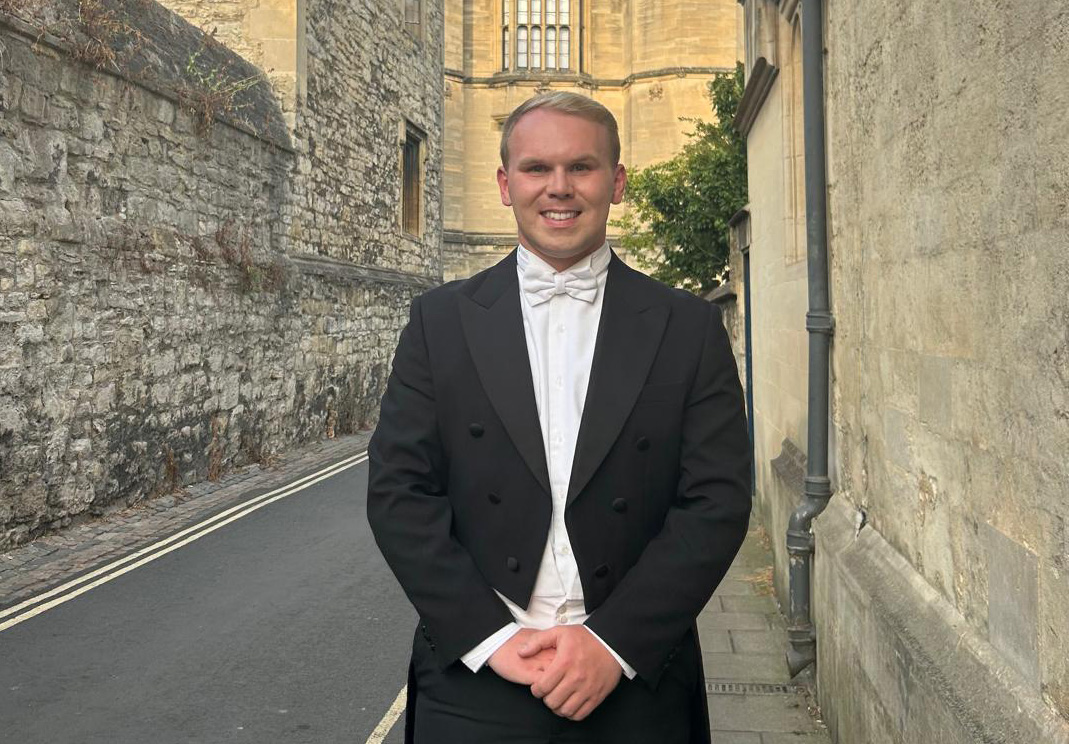
J.C.A. Meldrum Fieldwork Prize for Best Fieldtrip Report (Environmental Theme)
Ethan’s report analysed the temporal politics of participatory urban environmental governance through a study of the Catharijnesingel regreening project in the Dutch city of Utrecht, where a 12-lane highway was restored to a canal surrounded by green and blue public space. Inspired by his academic interests grounded in political geography, Ethan investigated who gets to shape the political ecology of the city within the context of the Dutch system of consensus building. Drawing on interviews with municipal officials, architects and local residents, his research examined the extent to which citizen participation was encouraged before, during and after the project. His fieldwork report highlights both the value and complexity of public involvement — raising critical questions about inclusion, co-creation, neoliberalism and the associated responsibilities placed on citizens in the design, implementation and maintenance of urban green space.
Elisenda Henderson Casadevall
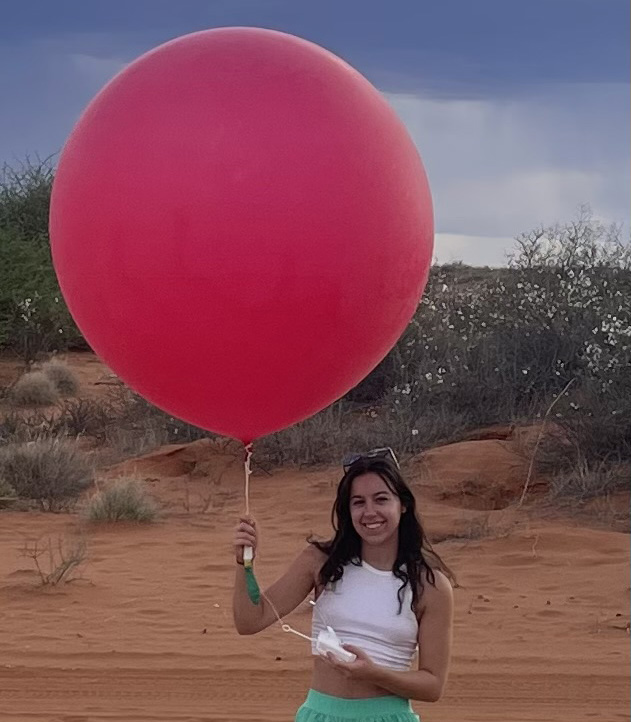
H.O. Beckit Prize for Best Physical Geography Dissertation
J.C.A. Meldrum Fieldwork Prize for Best Fieldtrip Report (Physical Theme)
Elisenda’s dissertation, for which she won the H.O Beckit Prize, was inspired by her time spent in the Kalahari, where she assisted Callum Munday and Richard Washington with collecting data on the climatology of the Kalahari Desert for the KAPEX field campaign. After this research trip Elisenda undertook her dissertation, which investigated the effect of topographic simulation within climate models, focusing on the Limpopo and Zambezi River Valleys. This dissertation investigated to what extent the topographic setting of the valleys is vital for water vapour transport within jet flow in southern Africa, and how this could impact the region’s climatology.
Using the Met Office Unified Model, idealised simulations of blocked and deepened valleys were compared to a control run to understand how topography impacts low-level jet flow and the subsequent changes to water vapour flux and atmospheric circulation. In the blocked simulation low-level jet flow decreased, leading to an anomalous reduction in water vapour transport and precipitation. This created a temperature increase of 2.5⁰C relative to the control experiment. In contrast, the deep valley simulation had increased jet flow and enhanced water vapour flux, which cooled conditions by 2.5⁰C and led to a wetter southern Africa, with rainfall increasing by 2mm per day. Elisenda’s dissertation identified topographic representation as a key control in climate modelling over southern Africa.
Ricardo Agustin Padilla
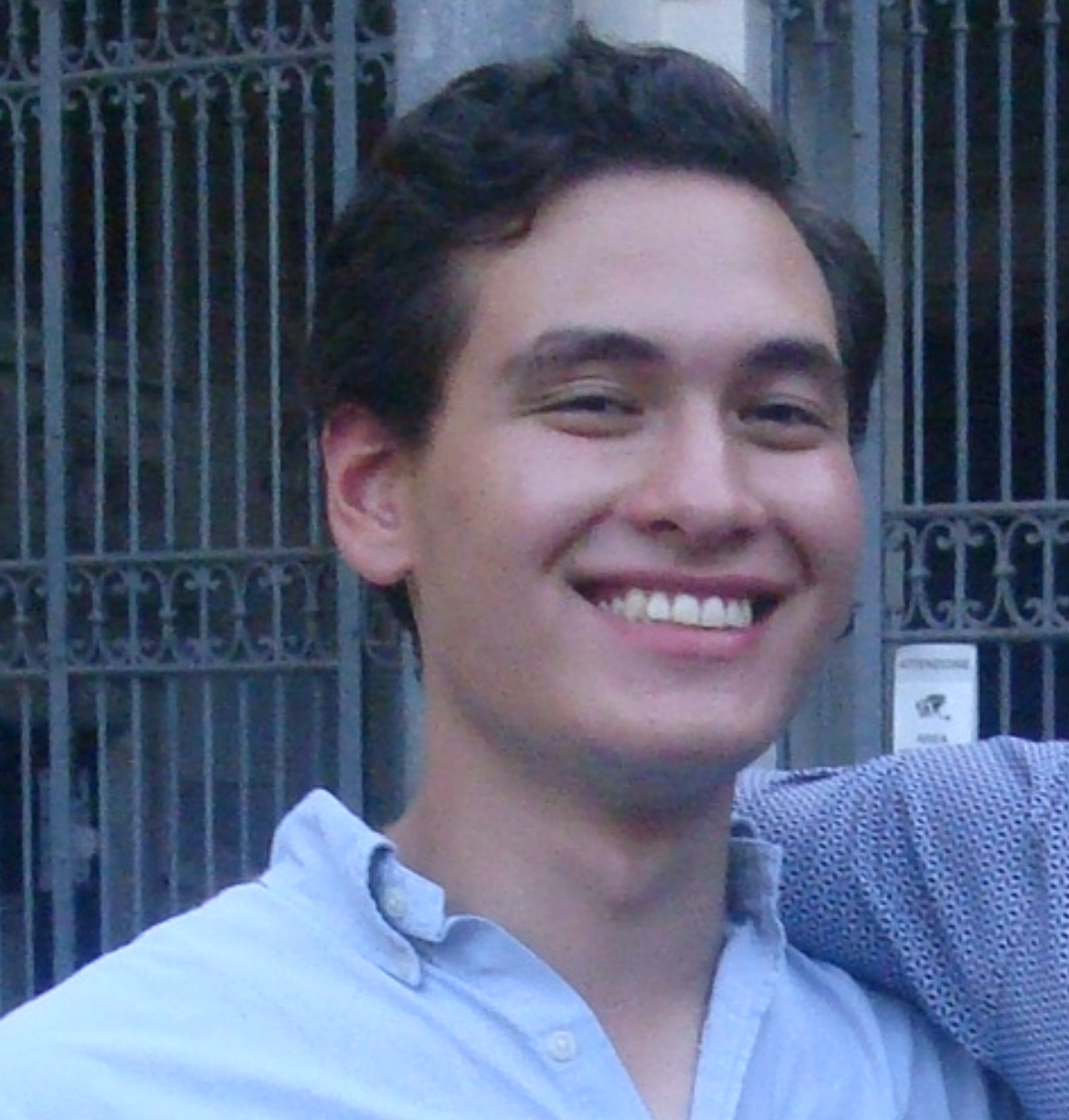
J.C.A. Meldrum Fieldwork Prize for Best Fieldtrip Report (Human Theme)
Deeply fascinated by history and urban geography, Ricardo conducted his fieldwork on the influential role of 1960s-70s protest movements in the shift from car-centric planning to modern Dutch cycling culture. While in Amsterdam, he conducted interviews with academics studying the history of Dutch cycling, transport policymakers, and city residents, supplementing this with archival data sourced from the Dutch Cyclists’ Union (Fietsersbond). Using both data sources, Ricardo argued that the shift towards bike-oriented planning could not be attributed to a singular group but occurred amidst a landscape of activism involving hippies, middle-class parents, and rural workers, each with distinct (and often contradictory) goals.
Kiran Kasinathan
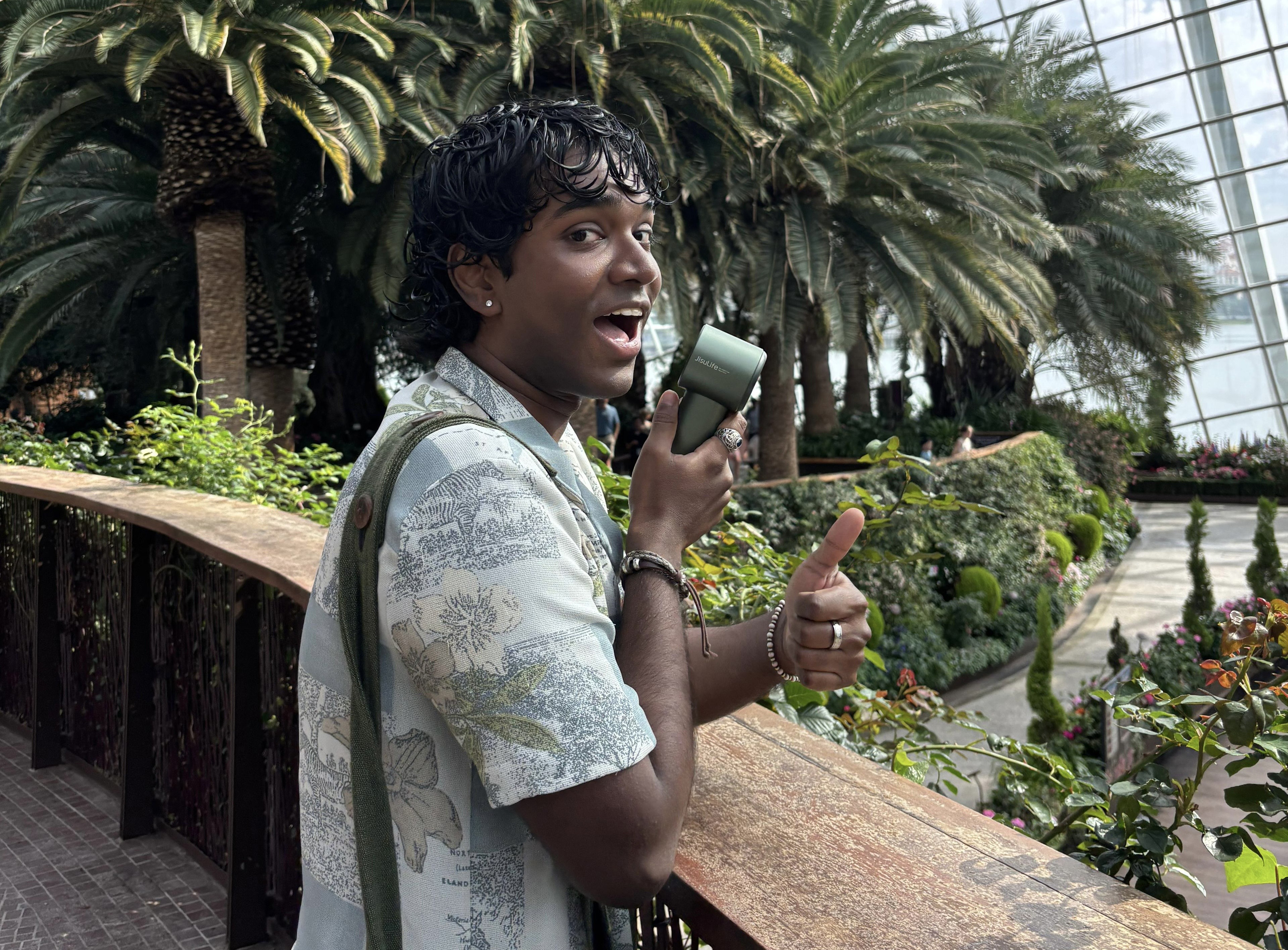
A.J. Herbertson Prize for Best Human Geography Dissertation
Kiran’s dissertation entitled ‘Catching Butterflies: Using poetic methods to explore the ambivalent subjectivities of queer youth produced by a Singaporean heteronormative education’ explores how the identities and experiences of queer youth in Singapore are shaped within an educational context that is not pro-LGBTQ+. Particularly, his work foregrounds the often ambiguous and undefined emotional experiences of queer students. This was achieved by incorporating poetry as a central aspect of his methodology, drawing from the works of Gabriel Eshun and Clare Madge. This included auto ethnographic poetry, poetry co-analysis with participants, and using research poems to represent the results in a heartfelt way. Poetry thus became Kiran’s chosen medium as a way of sharing knowledge in a way that refuses to reduce queer experiences to simple binaries of discrimination/inclusion.
This is further seen in a key finding of Kiran’s research. Queer youth in Singapore often experience a state of absence/presence, where a lack of positive education on queerness can create feelings of insecurity and liminal identities. This forces certain ambivalent survival strategies while also inspiring new forms of solidarity. Ultimately, Kiran’s dissertation speaks to the broader need for inclusive education and the centrality of emotions to understanding queer/youth experience.
Kiran chose to embark on this dissertation project as he is passionate about the emancipatory nature of education. As such, he strongly believes that we should think critically about how we can transform spaces of education into places that uplift and empower our youth, as opposed to (unintentionally) restraining them. He hopes that this research can be his stepping stone to understanding how to build more inclusive institutions both at home and abroad.
Joash Cheong
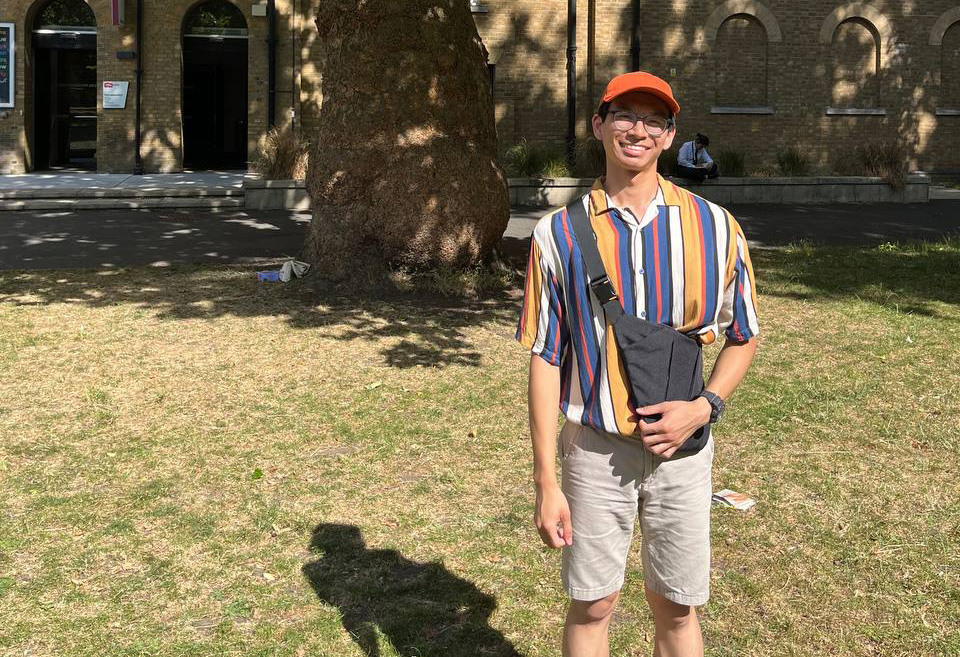
J.C.A. Meldrum Essay Prize for Best Three Extended Essays
Joash wrote three extended essays for Geographic Data Science, The Quaternary Period: Natural and Human Systems, and Conservation. With ArcGIS, the first extended essay involved building a habitat suitability model for short-finned eels in the Tamar River, an estuary in Tasmania. He drew heavily on open-access data from Australian institutions and the ecophysiology of freshwater eels at their silvering (adolescent life-stage). Findings point to highly rugose and brackish patches of seagrass or unconsolidated fine sediment substrata at moderately shallow depths of the lower estuary as critical habitat for silvering short-finned eels.
Harkening back to the Late Quaternary, his second extended essay was a discussion of the factors that best account for megafaunal extinctions in Southeast Asia. Here, he synthesised an eclectic mix of empirical palaeoclimatological proxies and sweeping biogeographic ideas. This led him to conclude while anthropogenic and climatic factors explain the most part of extinctions, unlike the relatively well-studied Americas and Australia, Southeast Asia’s Late Quaternary megafaunal extinctions were more nuanced, particularly given the exceptional magnitudes of change between inundation and exposure the Sunda Shelf underwent through the ice ages alongside new findings of the shelf itself subsiding.
Joash’s third work for the Conservation option sought to capture his imagination and passion for cetaceans in the three-dimensional and ever-fluctuating nature of pelagic ecosystems. The goal was to assess how well the patch-mosaic model applied to designing marine protected areas (MPAs) for cetaceans. He found that while the core principles of the patch-mosaic model such as the explicit recognition of spatiality in coupled biophysical processes, the liquid nature of the ocean means that it exhibits a greater ubiquity of continuous environmental gradients, an additional dimension of verticality and a wider range of temporal scales. Thus, he argues that a more time-contingent and three-dimensional surface model instead.
Runners up
Joash Cheong
And H.O. Beckit Prize Proxime (Runner Up)
Toby Venton
J.C.A. Meldrum Essay Prize Runner Up for Best Three Extended Essays
Barney Wakefield
A.J. Herbertson Prize Proxime (Runner Up)
Celebrating our graduates: dissertation and final year project awards
A huge congratulations to our recent graduates that have received internal departmental awards for their exceptional dissertations, end of year projects and field work. Here you can read about our prize winners' work, their findings and what inspired them to undertake these thought-provoking and often deeply personal projects.