

What's it like to start an undergraduate degree at Oxford Geography?
In brief
In this blog Josie Morgan, 1st Year Geography student and writer for the SoGE Student Writers Group, reflects on her first year studying geography at Oxford University, discussing the things she found most challenging, and what she loves about her course.
Overview
In this blog Josie Morgan, 1st Year Geography student and writer for the SoGE Student Writers Group, reflects on her first year studying geography at Oxford University, discussing the things she found most challenging, and what she loves about her course.
Reflections on a year studying Geography at Oxford
 Starting an undergraduate degree in Geography at the University of Oxford can be challenging, but ultimately it’s deeply rewarding. Here I will talk about how I have found the beginning of my degree, as I come to the end of my first year here at Oxford. My experience will differ to others who work differently to me, and for those in other colleges where the work is set differently, but I hope this piece offers some insight into what studying Geography at Oxford University is truly like!
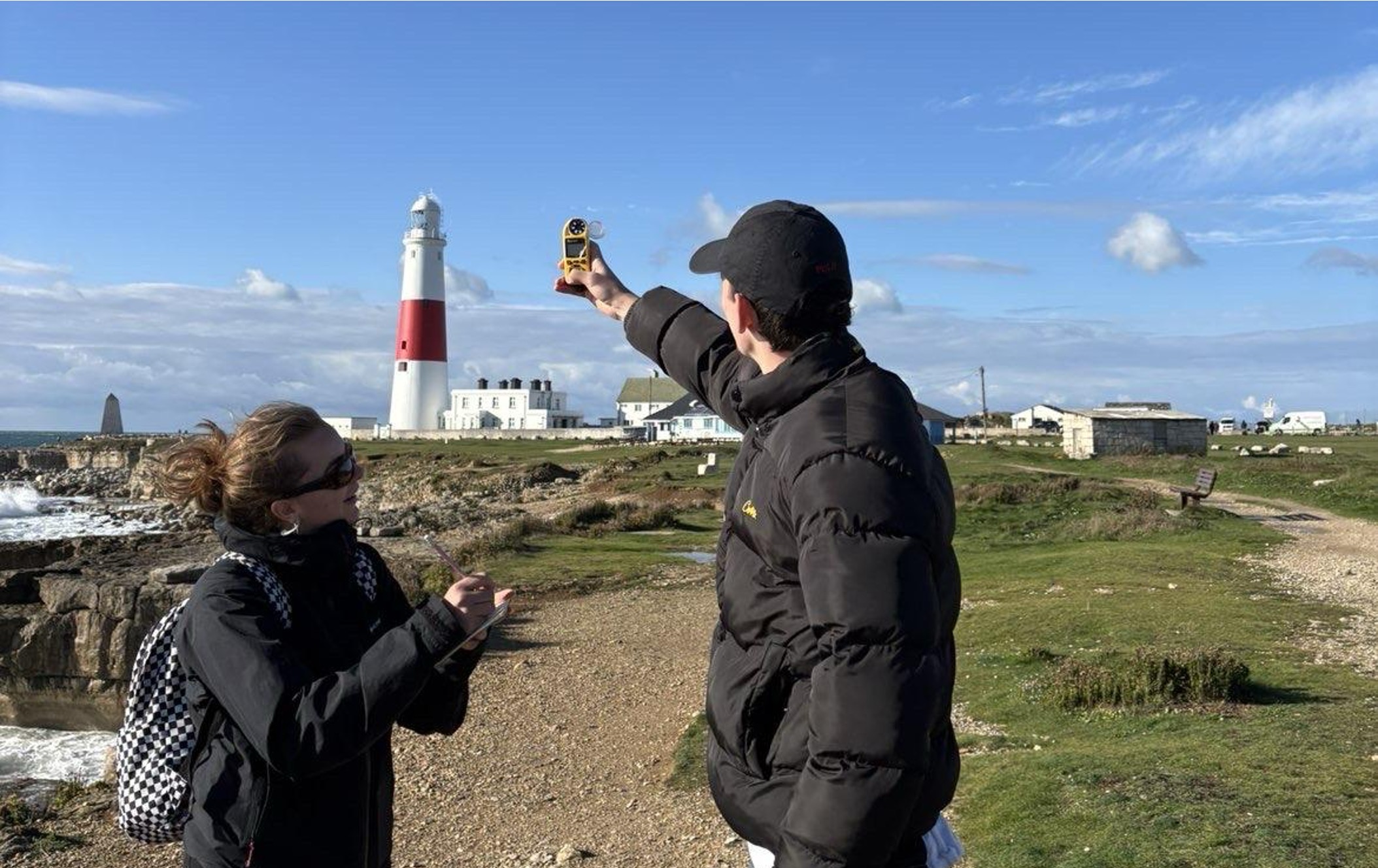
I began the first term – at Oxford we call it Michaelmas Term – with an open mind. I was cautious too, because I knew there would be rigorous academic work to come, but it turned out I didn’t need to worry much; the start of term was very relaxed. All Geography first year students get to go on a four-day field trip to Portland, Dorset, in the second week of Michaelmas Term. We’d had a couple of lectures as a cohort prior to this, but everyone had mostly kept to their college groups. The trip allowed us to socialise with other geographers outside of our colleges, so we could get to know our whole cohort, and it was unassessed, so we could enjoy ourselves without much pressure on the work. Meals together, group work in the daytime and pub trips in the evening meant that I can now go to lectures alone and not worry about who I end up sitting by. I feel comfortable talking to any member of our cohort, and I am so grateful for the friends I have made in other colleges. Having a good group of people you can talk to who share your experience of the work you are doing is invaluable. One of the most important lessons I felt I learned in the first term was that you don’t have to go through the academic side of things alone. It’s one of the things I love most about this course; that it promotes conversation and collaboration with your peers.
Following the Portland trip, we returned to Oxford to begin tutorials. The tutorial system differs between subjects and colleges. At Worcester College, we have had roughly one tutorial per week for the whole year. It is a very different method of learning to school. An obstacle I hit as I adjusted to it was how much the learning process is dependent on individual reading. Our first tutorial was focused on fluvial geomorphology, with much of the fundamentals learned via an online textbook. It was challenging to filter through such a dense text, and frustratingly time-consuming. For physical geography tutorials, textbook knowledge provides a basis that is then built upon with academic papers and articles, which offer research examples to illustrate the theory. I remember reading a paper by Montgomery et al. (2001) on the geomorphology of the Andes for our second tutorial. The paper is four pages long, yet it took me an hour to read. Understanding that you don’t need to take notes on every detail of a paper is key to adjusting to the university way of learning, but this is easier said than done. It is only recently, in my third term here, that I have finally begun to get to grips with how to skim read an article effectively. It’s a skill that takes practice, but that is what the first year is for!
In addition to the reading aspect of this new style of learning, the format of the tutorial itself is a further change from school. Each tutorial is usually an hour long and involves you and one or two others in your tutorial group discussing the topic with your tutor. I found this daunting to begin with, as there is nowhere to hide if you aren’t sure what to say, especially with topics you have only just come across. But being encouraged to think of a response even when you are unsure means you learn to think on your feet. You begin to surprise yourself by coming up with responses to questions you initially drew blanks on.

Adjusting to the way human geography is taught at university level was also daunting. Towards the end of the first term, we covered topics including ‘Imaginative Geographies’ and ‘More than Human Geographies’. These completely reshaped the way I think about the world; something I am grateful for now but was initially intimidated by. Human geography becomes more abstract and philosophical at this level, which was uncharted territory for me and made me feel quite out of my depth. Once you overcome this, however, you learn to fully appreciate how fascinating it is to study something in such depth, expanding your breadth of knowledge in ways you did not anticipate. But don’t worry! Things become easier as the year goes on. The topics we covered later – such as ‘Migration and Borders’ and ‘Nationalism and Fascism’ – helped to ground the more abstract concepts we looked at in the first term. You definitely have to trust the process, and trust your tutor!
For Geography, there are roughly one or two lectures each day. They are fascinatingly interesting and delivered by experts who specialise in each specific topic. The lecturers condense an entire topic into an hour’s overview, along with key case studies to consider. This is very different to how lessons are taught in school. The lecture topics vary significantly in accordance with the broadness of the course. One day we will have a lecture on biogeomorphology, followed by a statistics lecture on hypothesis testing, then the next day a lecture on the controversies of Net Zero! They keep you on your toes, but it is an incredible privilege to be instilled with such vast amounts of knowledge by people who have dedicated their lives to research and understanding.
 Time management is key to balancing the lectures, tutorials and all the other opportunities Oxford has to offer. A typical week as a first year undergraduate in Geography will include attending lectures and spending a good chunk of each day making your way through the reading material. I usually spend a day or two going through the textbook chapters and readings which give overviews of the topic. I then take around three days to read and take notes from articles and research papers to develop a breadth of understanding. In the final day or two before the tutorial, I will condense my reading notes into short summary flashcards. I then use these to make an essay plan, which I use to write the 1,500 word essay. On the day of the tutorial, I will brush up the essay, editing it down to the word count and pasting in the references. We hand in our essays prior to the tutorial and receive feedback a few days later. The feedback is very in-depth and critical, something which is difficult to adjust to at first, but this feedback is deeply valuable. Of course no essay on a topic you have only just begun to understand will ever be near perfect. The first year is about learning how your tutors want you to write your essays, and detailed feedback is crucial to this. It’s also important to remember that they want you to do well, so all the feedback they give is in effort to help you improve.
Overall, starting an undergraduate degree in Geography at Oxford University is a hectic but very rewarding process. The course allows you to meet like-minded people, and to discover new aspects of the subject you may not have covered before. The new learning style is tricky to adjust to at first, but ultimately allows you to improve and progress. I would highly recommend any prospective students considering this course to apply for Geography. I haven’t regretted my choice for a second!
In brief
In this blog Josie Morgan, 1st Year Geography student and writer for the SoGE Student Writers Group, reflects on her first year studying geography at Oxford University, discussing the things she found most challenging, and what she loves about her course.