
Investigating greenhouse gas emissions from rivers - a World Wetlands Day Q&A with Professor Bob Hilton
In brief
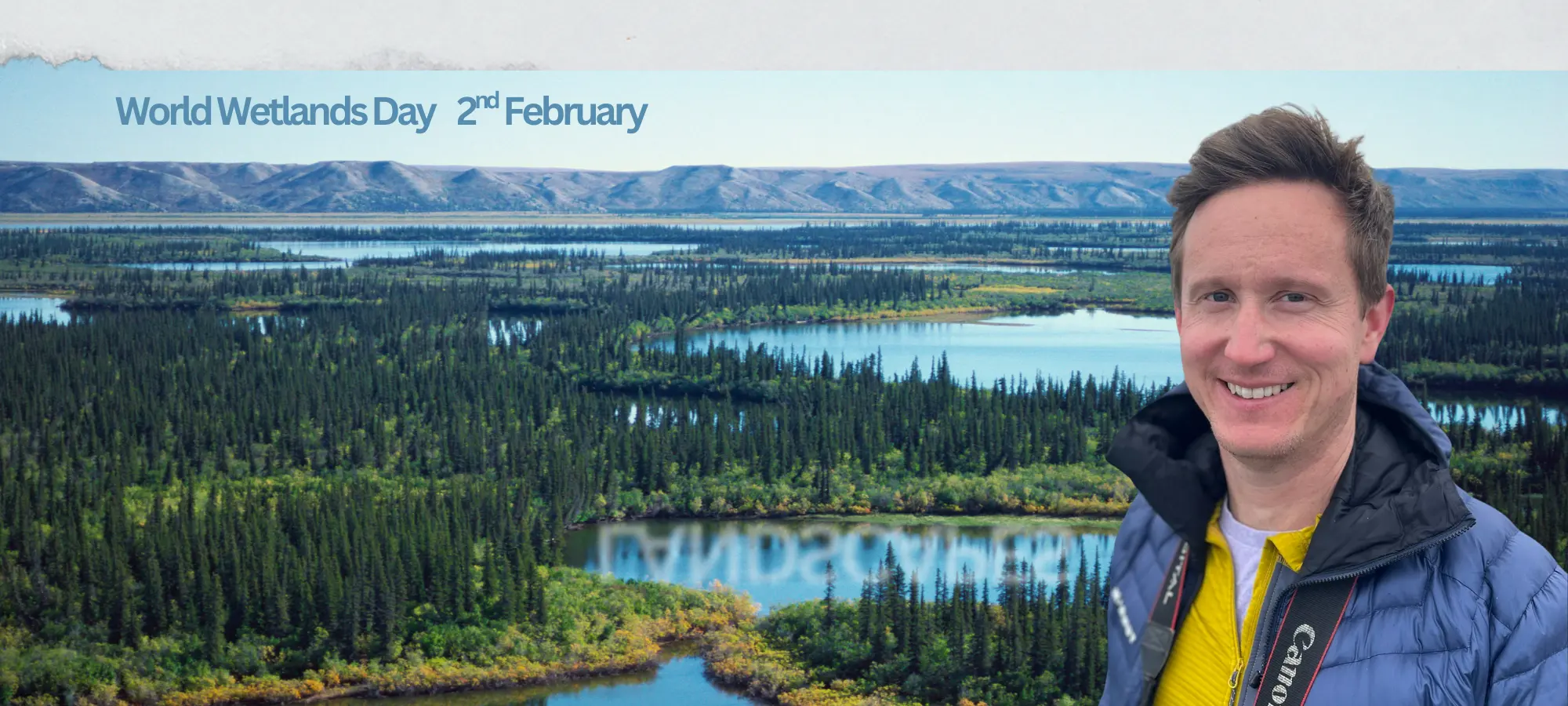
Did you know rivers release greenhouse gases? This World Wetlands Day, we spoke to Professor Bob Hilton (Professor of Physical Geography and Group Lead, Earth Surface Geochemistry) about his research on how rivers, streams and deltas release carbon dioxide and methane, and how these emissions may change as climate change accelerates.
Overview
Did you know rivers release greenhouse gases? This World Wetlands Day, we spoke to Professor Bob Hilton (Professor of Physical Geography and Group Lead, Earth Surface Geochemistry) about his research on how rivers, streams and deltas release carbon dioxide and methane, and how these emissions may change as climate change accelerates.

Q&A
What is your current research focus and what have you found about carbon dioxide emissions from rivers?
Our research aims to understand what controls the release of greenhouse gases from rivers, and how those controls might change in the future. We focus on places where rivers emit a lot of carbon dioxide and methane, such as peatlands, as well as Arctic regions where rapid climate change is transforming landscapes and river catchments.
A key part of our work is using isotopes and radiocarbon to date the age of carbon dioxide and methane and to trace their sources. In a recent study, we combined our own new measurements with excellent data from other researchers (Old carbon routed from land to the atmosphere by global river systems | Nature) and found evidence that some rivers are releasing very old carbon that has been locked away in soils and landscapes. Human activities have already disrupted the global carbon cycle and are increasing atmospheric CO₂. Our findings suggest that rivers may be making this worse by leaking additional carbon back into the atmosphere.
How do you go about working out the carbon emissions from a river? Why do you study particular river systems?
We directly measure the emissions of carbon dioxide and methane from river surfaces. To do this, we use a floating chamber placed on the water. As gases accumulate inside the chamber over 2–3 minutes, we track the increase with a gas analyser to calculate how much carbon dioxide and methane the river is emitting. We then have methods to sample the gases from the river and bring them securely back to the laboratory to date them.
The downside is that these measurements have to be taken in person. Greenhouse gas release can vary with seasons and environmental conditions, meaning we design our sampling campaigns to revisit sites throughout the year to capture how physical, chemical, and biological drivers change. This information helps us develop better models of how rivers contribute to greenhouse gas emissions.
We study systems such as peatland rivers and Arctic rivers because they are especially sensitive to climate change and are known hotspots for carbon release, making them important natural laboratories.
Are there any tipping points or feedback loops that threaten to accelerate these processes in rivers?
We don’t yet have evidence for irreversible tipping points in river greenhouse gas emissions. However, we are investigating whether warmer air and water temperatures are increasing carbon dioxide and methane release. Higher temperatures can accelerate microbial breakdown of organic matter in rivers and sediments, which could create a feedback loop: warming leads to more emissions, which then contribute to further warming. Our ongoing and preliminary data suggests these emissions are indeed temperature-sensitive, but more work is needed.
In the Arctic, permafrost thaw is adding an extra layer of complexity. As permafrost warms and collapses, it delivers fresh organic material into rivers, which may fuel additional greenhouse gas production. Understanding these potential feedbacks is a major focus of our future research.
Where are your favourite places your research has taken you, and have you had any adventures in the field?
There have been plenty of memorable moments during more than 20 years of fieldwork across a wide range of biomes and major river systems. Field safety is always our top priority and we try to prepare as well as possible, even though not everything can be anticipated. One story our colleagues in Canada still mention is running out of petrol in a boat on a remote Arctic delta. We made it back safely, and we are now very thorough about checking fuel levels (especially when the gauge isn’t working!).
A recent highlight was working in the Mackenzie River delta. We wanted to track methane in detail but weren’t sure beforehand whether we could collect and measure samples suitable for radiocarbon dating. The trip was a success, and collecting those samples, while bobbing around in a small boat on a huge Arctic river channel, was incredibly rewarding.
We’ve also started new work in Svalbard. The landscapes are stunning and challenging in equal measure, but with a great team it has been a truly enjoyable and inspiring place to work.
What advice would you give to current students and early career academics interested in this area of research?
Read widely and deeply, and engage with the research that has already been done. That’s how I identify gaps in knowledge and think creatively about how to fill them and try and spot the most important topics. That also includes thinking about new methods, combining existing techniques, exploring understudied regions, or missed, important questions.
Also consider the skills you have and the skills you want to develop. This field needs a wide range of expertise: fieldwork, laboratory techniques, data analysis, modelling, and more. Collaboration is essential, and working with people whose skills complement your own can open up exciting new directions.
There is a lot to discover, and we need many different approaches and perspectives. I encourage students and early career researchers to get involved and help tackle these big questions.
Read more
Find out more about Professor Bob Hilton's work and the RIV-ESCAPE project here.
In brief
Did you know rivers release greenhouse gases? This World Wetlands Day, we spoke to Professor Bob Hilton (Professor of Physical Geography and Group Lead, Earth Surface Geochemistry) about his research on how rivers, streams and deltas release carbon dioxide and methane, and how these emissions may change as climate change accelerates.