

Geography today: how is the discipline responding to its colonial past?
In brief
Ewan Messenger is a 3rd year geography student and writes for the SoGE Student Writers Group. In this piece he explores the ways that geography, both as a subject at Oxford and as a discipline more widely, has begun to respond to its colonial roots.
Overview
Ewan Messenger is a 3rd year geography student and writes for the SoGE Student Writers Group. In this piece he explores the ways that geography, both as a subject at Oxford and as a discipline more widely, has begun to respond to its colonial roots.
"Such a vast area of land and sea to be explored and developed: such a vision of great burdens for white man to take up in far-off regions, dim and indefinite as yet"
Thomas Holdrich, former President of the Royal Geographic Society (RGS), 1899
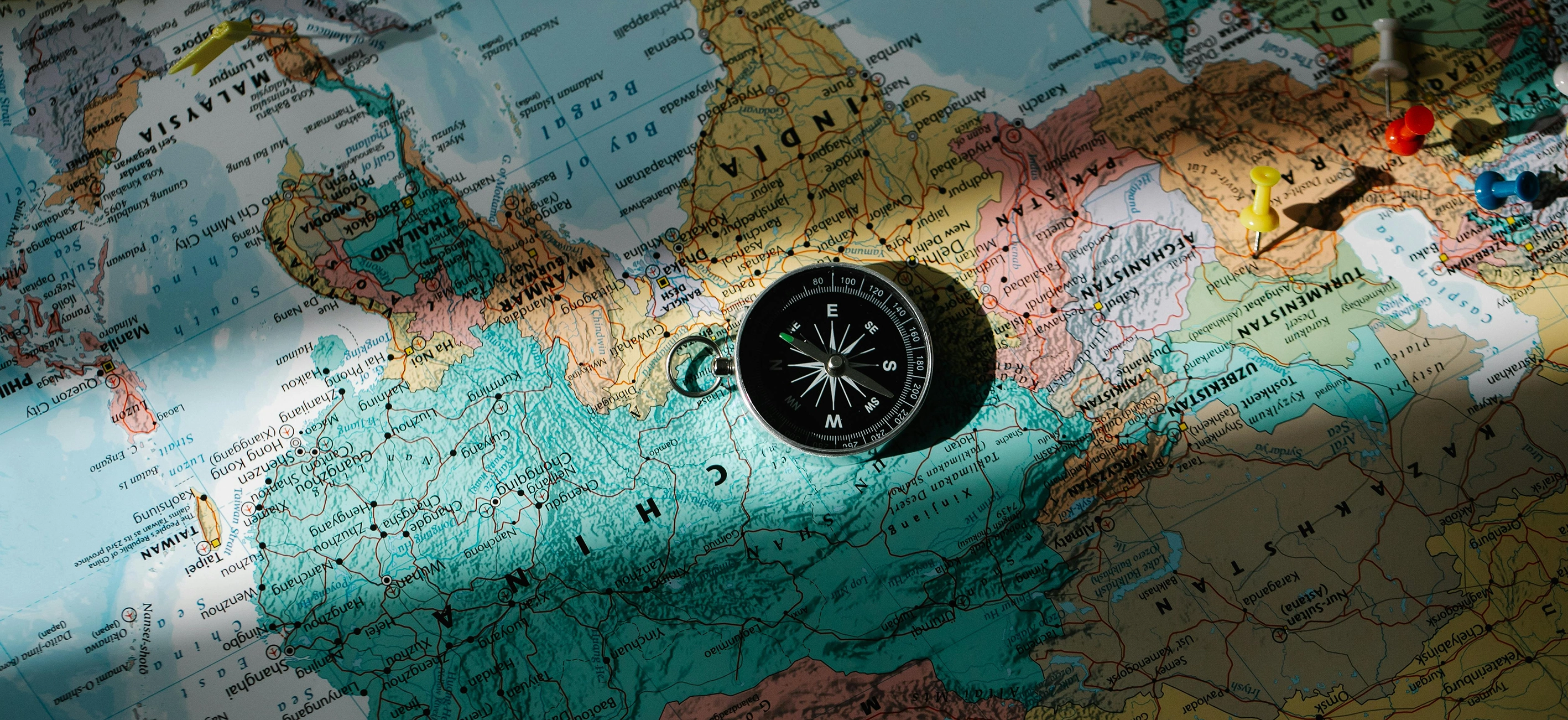
Thomas Holdrich’s quote highlights the ways in which the discipline of geography was born in parallel with the European imperialist expansions of the mid-19th century. Its techniques and methods, like mapping and cartography, were used as tools in a wider effort to advance colonialism. Mapping the Western territories of the US (Mathewson, 2006) is one such example. By recognising geography’s imperialist history, geographers can reflect on the colonial roots of the discipline and work to undo these harms.
An example of such work can be seen in Gerry Kearns’s research on Halford Mackinder (1861-1947), an Oxford academic and founder of the Geographical Association. Mackinder not only emphasised defending and maintaining the British empire through his teachings and textbooks, but also actively engaged in brutal imperialist exploration himself. In final response to this history, The School of Geography and the Environment changed the Halford Mackinder Professor of Geography to ‘1971 Professor of Geography’ in February 2025.
This is an example of the ways geographers have begun to meaningfully challenge the colonial roots of their discipline, even as such change has been incremental and delayed by institutional slowness. Many have started to adopt a ‘decolonial’ approach to the subject, which involves both theoretically and practically deconstructing the legacy of the colonial systems in our world. Though by no means an exhaustive examination, in this article I hope to showcase three important strands of anticolonial work emerging within geography:
- The creation of physical spaces for dialogue on how to practically decolonise the discipline, including holding events in the Global South;
- The encouraging of ‘defiant scholarship’ in producing geographical research;
- The promotion of decolonial approaches in education.

The creation of spaces for dialogue around how to decolonise geography is an important step in the right direction. For example, The RGS-IBG 2017 Annual Conference had the theme ‘Decolonising Geographical Knowledge: Opening Geography out to the world’. By doing this, the decolonial imperative – something that has long been kept at the margins of geographical research – was mainstreamed. More recently, it was announced that the 19th International Conference of Historical Geographers will be held in Rio de Janeiro, a city in the Global South, in 2028. Although some geographers argue that such mainstreaming could de-radicalise anticolonial scholarship (and thus make them less impactful), that the movement has reached main stages at all should be considered a win – but only if followed through with action.
Decolonial approaches to geography are aiming to build what Arturo Escobar, a Colombian-American Professor of Anthropology, calls a ‘pluriversality of knowledge’, where multiple sources of knowledge are valued and drawn upon (Escobar, 2016). To do this, geographers have started to participate in and actively call for research that defies institutional norms. Oxford Geographers Dr Amber Murrey and Professor Patricia Daley (2022) argue for this in their paper on ‘defiant scholarship’; a form of scholarship that seeks to centre African knowledge and challenge colonial logics. A colonial logic could be, for example, the use of Africa as merely a case study within Western theory on African geographies, without recognising the continent’s own intellectual rigour, theories and agency.
To challenge this, Daley and Murrey (2022) highlight the long history of defiant scholarship in Africa, such as Claude Aké’s ‘Social Science as Imperialism’. In their course ‘Critical Development Geographies’, taught at Oxford for Geography undergraduates, they centre thinkers and leaders who defy colonial norms, like Thomas Sankara of Burkina Faso in 1983-87. Furthermore, in a collaboration with the University of South Africa, Dr Amber Murrey, Dr Nokuthula Hlabagane (of UNISA) and Dr Steve Puttnick (of Oxford Department of Education) organised a seven-week course for PhD students on ‘Decolonising Research Methodologies’, open to those in South Africa and Oxford. This partnership put decolonisation into practice, and formed a part of the wider movement within teaching, at all levels, to decolonise our curriculums.

Following the work of student-led movements calling for the decolonisation of Higher Education in the UK, many lecturers and universities have made anti-colonial forms of teaching a priority. This includes Anna Laing’s ‘Decolonial Movements’ module, taught in undergraduate geography and international development in 2017/18 at the University of Sussex; the creation of a Decolonising Geography educators group, aiming to decolonise the curriculum at all levels in the UK in response to COVID-19 and the murder of George Floyd; and the University of Bristol’s Decolonising pedagogy group. My experience on the Critical Development Geographies Module here at Oxford has solidified the decolonisation of geography as central to the subject, showcasing different views from across the world and helping us re-think development theory, discourse and practice.
Through these activities and developments, it is clear that geography as a discipline is reflecting on its colonial past. Geographers are responding to the subject’s uncomfortable history, not only through their own scholarship, but also by actively changing how the discipline is studied, practiced and the engagements it has with the world at large. Though there is certainly more to do, the decolonisation of geography has begun.
In brief
Ewan Messenger is a 3rd year geography student and writes for the SoGE Student Writers Group. In this piece he explores the ways that geography, both as a subject at Oxford and as a discipline more widely, has begun to respond to its colonial roots.