

Farm Environments in Policy and Practice

Farm Environments in Policy and Practice
Participatory Approaches to Agri-Environment Scheme Development
About
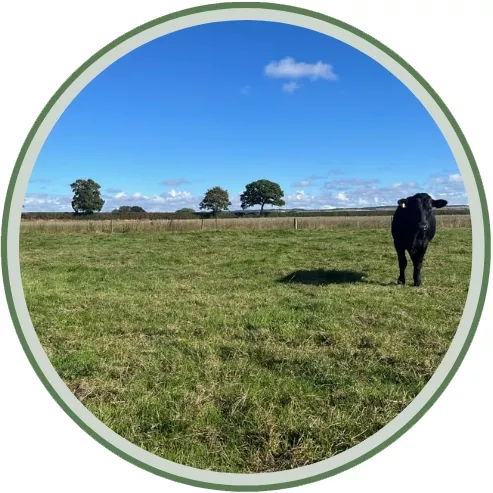
Farm Environments in Policy and Practice is a Defra funded research project which uses innovative participatory social science methods to produce rigorous, policy relevant insight into farmer and land manager experiences of agri environment scheme development during the post Brexit agricultural transition. Our work blends qualitative and quantitative approaches, informed by cultural and environmental geography, to surface how environmental outcomes are negotiated, delivered and experienced on the ground. We co design research with farmers, policymakers and land management organisations so that evidence directly addresses practical delivery challenges and emerging policy needs.
Why this research matters
The project is situated within a major period of policy transition. Following the 2016 referendum and the UK’s departure from the EU (formalised in January 2020), English agriculture moved away from the Common Agricultural Policy (CAP) and its long‑standing mechanisms of direct payments. Defra set out an ambition for a 'Green Brexit' and a new direction for agriculture that pays for environmental outcomes rather than simply for land area. Key milestones included the Health and Harmony consultation (2018), the Agriculture Bill, and Defra’s Agricultural Transition Plan (2021–2024), which together established the principle of 'public money for public goods' and introduced Environmental Land Management (ELM) as the central delivery framework.
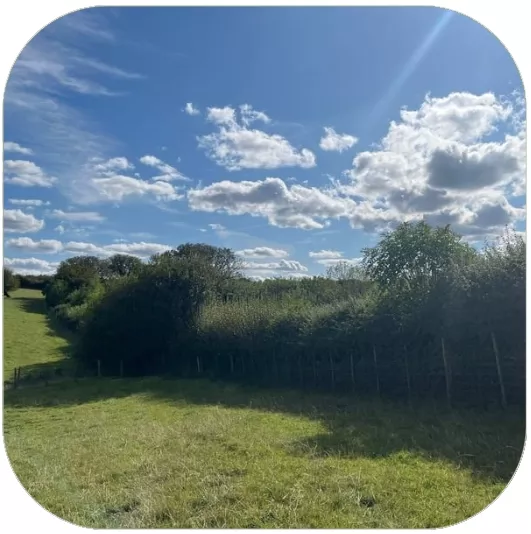
ELM represents both continuity and change. It builds on decades of agri‑environment schemes (from Environmentally Sensitive Areas and Countryside Stewardship to Environmental Stewardship), but departs from CAP‑style support payments, 'subsidies', towards payments that reward environmental and climate outcomes. Early ELM design proposed three complementary strands: the Sustainable Farming Incentive (SFI), a broadly accessible, standards‑based scheme; Local Nature Recovery (originally intended to enable larger‑scale, habitat‑focused action); and Landscape Recovery, large collaborative, long‑term projects tackling catchment or landscape‑scale objectives. Subsequent departmental decisions have reshaped these strands (for example through commitments to retain some elements of Local Nature Recovery within an evolving Countryside Stewardship offer), but the underlying ambition remains: to create schemes that support farming through the delivery of environmental public goods, and enable the UK to meet our targets for biodiversity and climate.
Co-design
A central foundation of the transition has been Defra’s stated commitment to co‑design: involving farmers and stakeholders early and iteratively in scheme development. The Agricultural Transition, including the SFI Pilot and ELMs Test & Trials, was conceived to operationalise that commitment and to generate practical learning for rollout. However, the co‑design process has been uneven in practice: while many farmers and facilitators welcomed the opportunity to contribute, others reported frustration at limited follow‑through, changing ministerial priorities and policy delays. The result is a policy environment that remains dynamic and sometimes uncertain, making independent, rigorously co‑designed social science essential for capturing real‑world experiences and translating them into insightful and actionable policy insight.
Against this backdrop, our project has three main research aims:
Main research aims
- Support ELM development with place‑based, farmer‑centred evidence drawn from the SFI Pilot, Test and Trials, and grassroots innovation
- Test and refine our practical co‑design methods so that farmer knowledge and delivery realities genuinely shape scheme design
- Provide rapid, credible social‑science input that policymakers can draw upon as policy needs emerge or when urgent delivery questions arise
Key Research Staff

Professor Jamie Lorimer
Principal Investigator
Dr Jennifer Dodsworth
Co-Investigator
Dr Rachel Lasko
Research Associate
Four interconnected work packages
Work Package 1: Expanding farmer connections
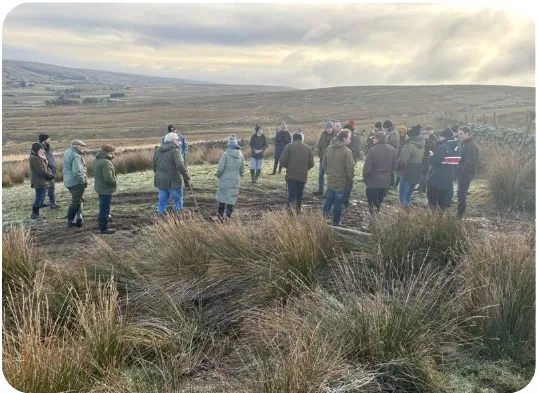
We deepened engagement with SFI Pilot participants through regional on‑farm events, local peer networks and detailed mixed‑methods case studies. Methods include semi‑structured interviews, short survey modules to allow cross‑case comparison, and social network mapping to reveal peer learning pathways. This WP documented how the SFI Pilot was experienced across different landscapes, sectors and farm types, and developed locally grounded recommendations for future scheme design.
Work Package 2: Enhancing co‑designed evidence
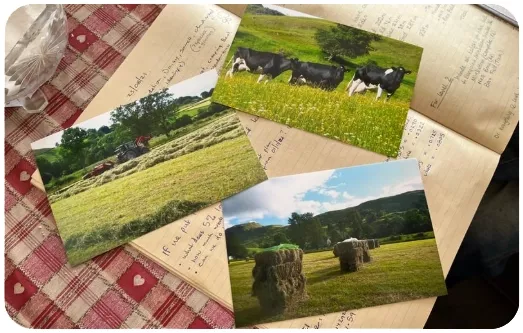
This strand focused on the practical mechanics of participation. We ran participatory 'transaction‑cost' workshops, examined farmer‑focused recording approaches (digital and paper learning journals, cost diaries), and explored how farmer-led monitoring and reflections can help produce co‑designed evidence on costs, record‑keeping burdens, and enhance learning processes.
Work Package 3: Enriching learning and conclusions
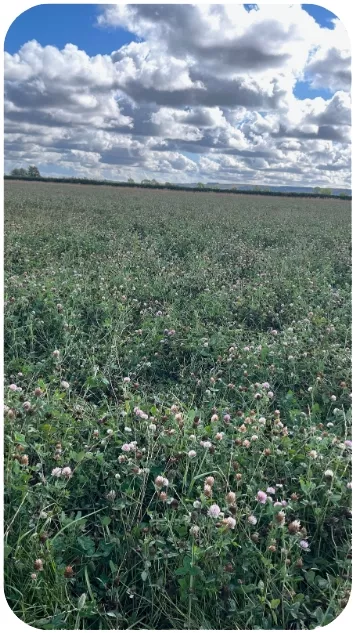
This work package delivered detailed, individually‑structured final exit interviews with SFI Pilot participants across England. Each interview built directly on respondents’ earlier comprehensive survey answers, allowing us to follow up on particular experiences, unexpected findings and give farmers space to tell the fuller story of their pilot journey in their own terms. These in‑depth conversations captured practical detail about how standards played out on different farms, the challenges and benefits experienced during participation, farmers' hopes for their own holdings, and their recommendations for the future of England's agri‑environment policy. The interviews were deliberately responsive and farmer‑centred: question schedules were tailored to each respondent so we could explore the most salient issues for their context while preserving comparability through agreed thematic prompts. The resulting corpus of rich qualitative data provides granular, place‑sensitive insight for policymakers seeking to understand real‑world delivery, refine scheme design, and support farmers through the agricultural transition.
Work Package 4: Agile research and policy support
Originally conceived as a flexible, responsive, supplementary research strand, WP4 has been expanded since the SFI Pilot ended to provide rapid, cutting‑edge social science for developing ELMS policy. WP4 delivers:
- rapid evidence syntheses and 'policy lab' sessions for Defra teams;
- targeted field visits and 'evidence safari' learning events with policymakers and regional partners;
- short, co‑produced research projects investigating pressing questions (for example, uplands-specific challenges and farmer participation in Landscape Recovery);
- iterative policy briefs and practical toolkits that translate findings into implementable design and delivery options.
This Agile strand ensures our research can respond quickly to policy windows while maintaining methodological rigour.
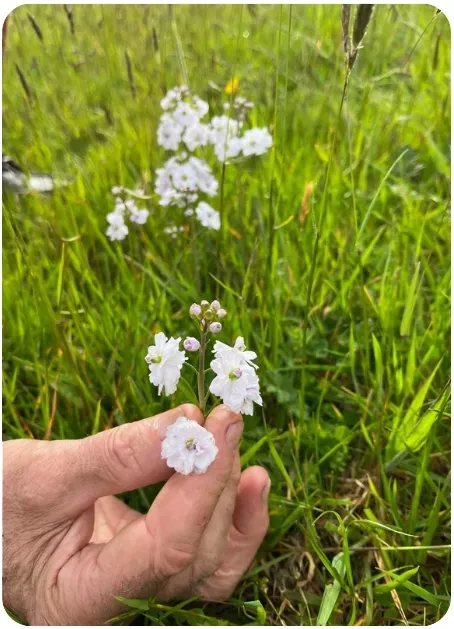
Farm Environments in Policy and Practice seeks to bridge the gap between policy design and on-farm reality. By combining participatory social science with cultural and environmental geography, the project provides Defra and its partners with evidence grounded in lived experience. Our work illuminates how agri-environment schemes can be made both practically workable and ecologically ambitious, schemes that recognise farmers as skilled environmental stewards and reward their contributions to resilient, biodiverse landscapes. In doing so, the research contributes to shaping Environmental Land Management policies that deliver genuine benefits for farmers and for nature.
Contact us
For any enquiries about our research, please contact: jennifer.dodsworth@ouce.ox.ac.uk
Farm Environments in Policy and Practice
Participatory Approaches to Agri-Environment Scheme Development